
Dental Fillings: What They Are, Why They Matter, and What Happens If You Delay Treatment
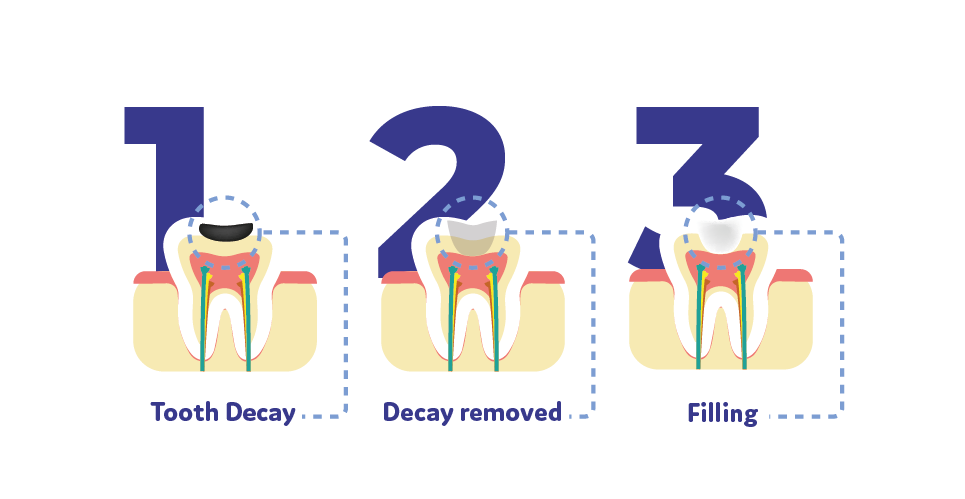
A dental filling, also known as a dental restoration, is one of the most common ways to repair a tooth that has been damaged by decay, fracture, or wear. When a cavity forms, the damaged part of the tooth is removed, the area is cleaned, and the space is filled with a material that restores the tooth’s shape, function, and strength.
It sounds simple because, when treated early, it usually is.
The problem starts when treatment is delayed. A small cavity rarely stays small. Over time, decay moves deeper into the tooth, and what could have been managed with a straightforward filling may turn into pain, infection, a broken tooth, or the need for much more complex treatment.
Why Fillings Matter
A cavity is an active disease process. Once it starts, it can keep progressing if nothing is done.
At first, you might notice mild sensitivity to cold drinks, hot food, or sweets. Later, that can become a proper toothache. If the decay reaches the inner part of the tooth, bacteria can reach the nerve and blood supply, increasing the risk of infection, swelling, and abscess formation.
That is why fillings matter. They do more than repair a tooth. They stop the damage from going further.
What Happens If You Don’t Treat a Cavity?
Delaying treatment can lead to a series of problems, and they tend to get more serious over time.
More Pain and Sensitivity: As decay gets deeper, the tooth becomes more vulnerable. What starts as occasional sensitivity can become constant discomfort or sharp pain.
Infection and Abscess: If bacteria reach the pulp, the inner part of the tooth can become infected. This can lead to an abscess, which may cause severe pain, swelling, fever, and, in serious cases, the spread of infection beyond the mouth.
Tooth Fracture or Tooth Loss: A tooth weakened by untreated decay becomes more likely to crack or break. If too much of the tooth structure is lost, the tooth may no longer be restorable and may need to be removed.
Difficulty Chewing and Speaking: A painful or damaged tooth can make everyday things harder. Chewing may become uncomfortable, and even speaking can be affected when pain is constant.
Bigger Costs Later: One of the biggest risks of non-treatment is that a small, manageable issue can become a much more expensive one. A filling may turn into a root canal, crown, extraction, bridge, or implant if decay is allowed to progress.
Impact on Overall Health: The mouth is highly connected to the rest of the body. When infections develop in the teeth or gums, they can affect the body’s inflammatory response and contribute to wider health problems. Treating dental disease early helps reduce that risk.
Types of Filling Materials
There is no single “best” filling material for every situation. The right option depends on the size of the cavity, the location of the tooth, the forces that tooth takes when chewing, and what matters most to you: appearance, durability, or both.
Composite fillings are tooth-coloured and popular because they blend naturally with your teeth. They are commonly used when appearance matters and are a standard option for many restorations.
Amalgam fillings are silver-coloured and have been used for many years. They are known for their durability and are often associated with long-lasting performance, especially in areas that take a lot of chewing pressure.
Ceramic restorations are strong and aesthetic, and they are often used when a larger restoration is needed. They are a good option when both strength and appearance are important.
Gold restorations are less common today, mainly because of their colour, but they remain one of the most durable restorative options available.

How Is the Material Chosen?
The choice of filling material is not random. It depends on several things:
How large is the cavity
Whether the tooth is at the front or back of the mouth
How much pressure does the tooth take
Whether the patient wants a tooth-coloured option
How much healthy tooth structure remains
A small cavity in a visible tooth may suit one material. A larger cavity in a back molar may suit another. This is why a proper assessment matters.
The Bottom Line
A dental filling is a small treatment with a big purpose. It restores a damaged tooth, protects it from further decay, and helps avoid more serious problems like infection, tooth loss, and expensive dental work later on.
If a tooth needs a filling, acting early is almost always the simplest, safest, and most cost-effective choice.
All our content is grounded in scientific research. If you're interested in reading more into this topic, feel free to explore not only the articles mentioned below but also other scientific studies and research papers that provide valuable insights. Science is a vast and ever-evolving field, and there's always more to discover and learn.
Understanding dental caries as a non-communicable and behavioral disease: Management implications (2022)
Associations between dental caries and systemic diseases: a scoping review (2021)
A Historical Perspective on Dental Composite Restorative Materials (2024)
Direct composite resin fillings versus amalgam fillings for permanent posterior teeth (2021)

